← All guides3After

Measure event ROX
without a spreadsheet meltdown

9 min readUses DebriefsSurvey analysis

The short version

  1. 1Decide what "return" means before the event. One goal. Write it down. Nobody gets to change it afterwards.
  2. 2Count things people did, not things they saw. Uploads, answers, opt-ins. Impressions are a vibe.
  3. 3Check back at 30 and 90 days. Most of the return shows up after the thank-you emails.

Five steps, one honest number

1Step 1 of 5

Pick one goal before the doors open

ROX needs a definition of "return", and an event can't have six of them. Choose one: new contacts, content for the next quarter, feedback on a product, or customers who come back.

Write the goal and the number that would count as a win on one line, and send it to whoever will judge the event. "200 opted-in contacts" is a goal. "Brand awareness" is a wish.

If you're measuring after the fact and nobody set a goal, pick the one the event was obviously built for, say so in the write-up, and set one properly next time.
2Step 2 of 5

Count what people did, while they're doing it

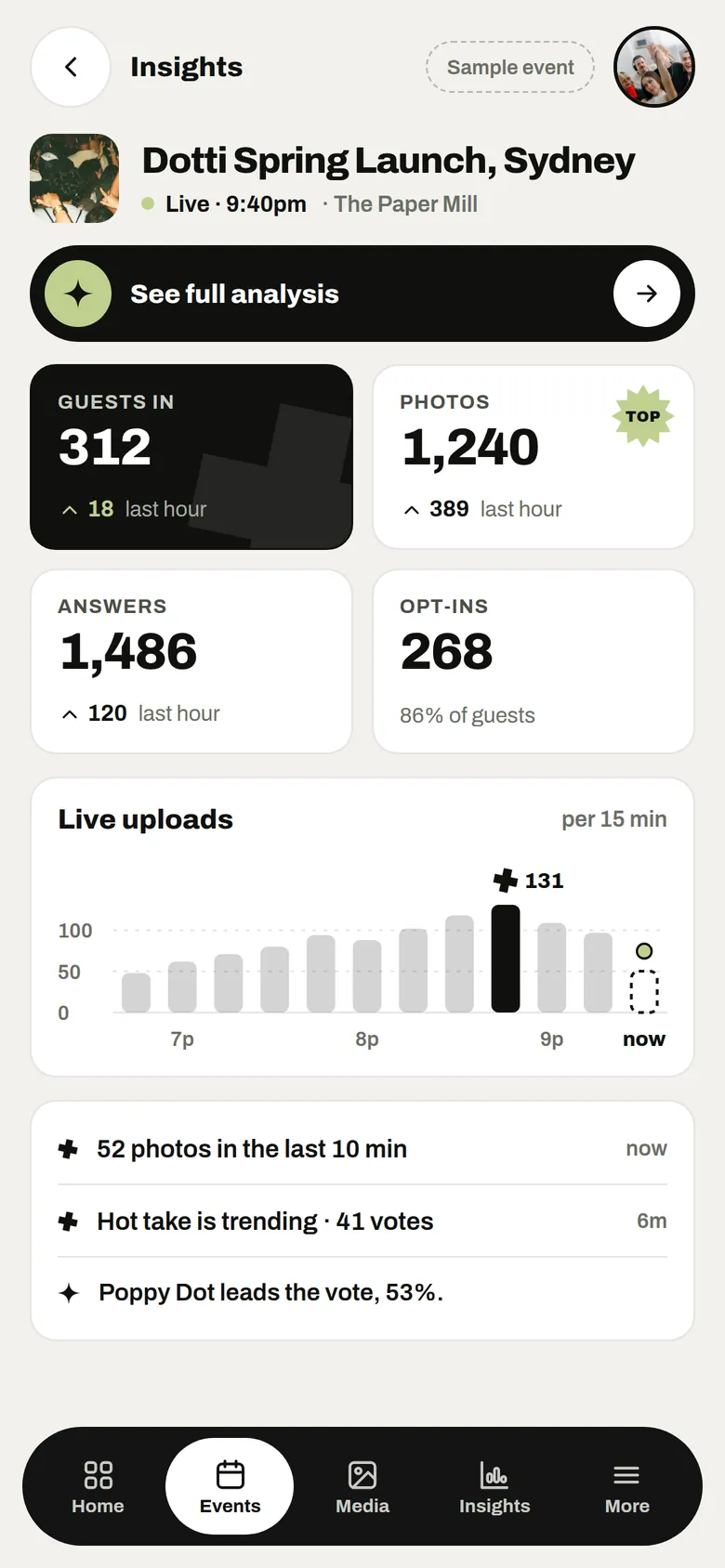
The numbers that hold up are actions: how many guests added photos, how many answered a poll, how many opted in to hear from you. Each one is a person choosing to do something, which is more than a footfall counter can say.

If the album is where guests add photos and answer questions, those counts collect themselves. Lead capture keeps opt-ins with the consent wording each guest saw, and polls and prompts sit inside the same album.

Write down the attendance count on the day too. You'll want it as the bottom half of every percentage.

Live event insights on a phone: guests in, photos, answers and opt ins, with uploads per 15 minutes
3Step 3 of 5

Put a cost on each result

Take the total event cost (venue, food, staff time, freight, the lot) and divide it by your goal's count. That's your cost per contact, per usable photo, or per survey answer.

On its own the figure means little. Next to what the same result costs you elsewhere, it means a lot. Compare cost per contact against your paid social leads, or cost per cleared photo against your last shoot.

Be honest about staff time. It's the cost most event ROX numbers quietly forget, and the first thing a finance person asks about.

4Step 4 of 5

Ask guests what changed, in one question

Numbers tell you what happened. One good question tells you why. Put a single poll or question in the album near the end: "How likely are you to try us after today?" or "What will you tell a friend about this?"

Survey analysis reads the answers back as themes, so you're not scrolling through 300 replies at midnight. Pull out two real quotes. A direct line from a guest goes further in a report than any chart.

Keep it to one or two questions. A ten-question survey at a party gets answered by the four most polite people there.

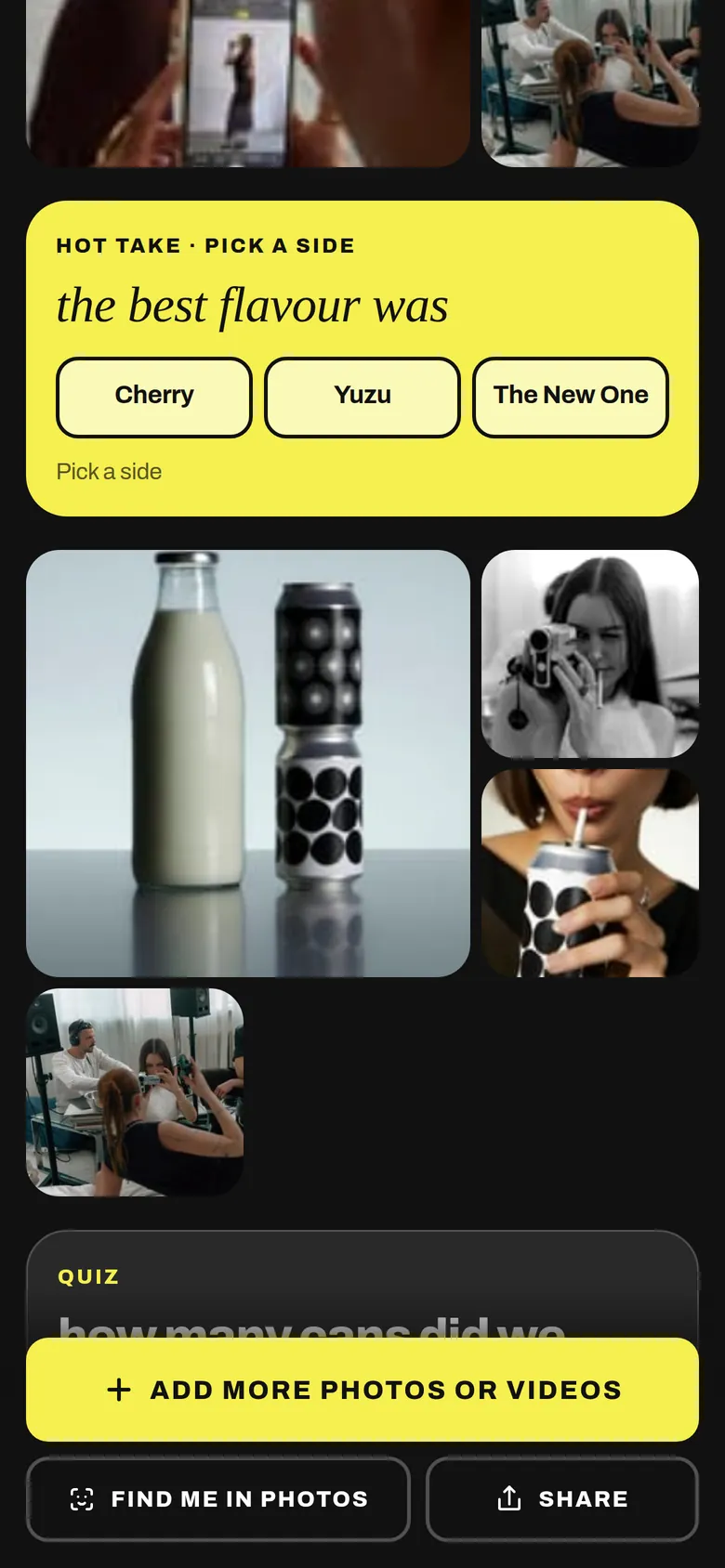
A pick a side vote between three flavours, inside the album
5Step 5 of 5

How to measure event ROX on one page, then again at 90 days

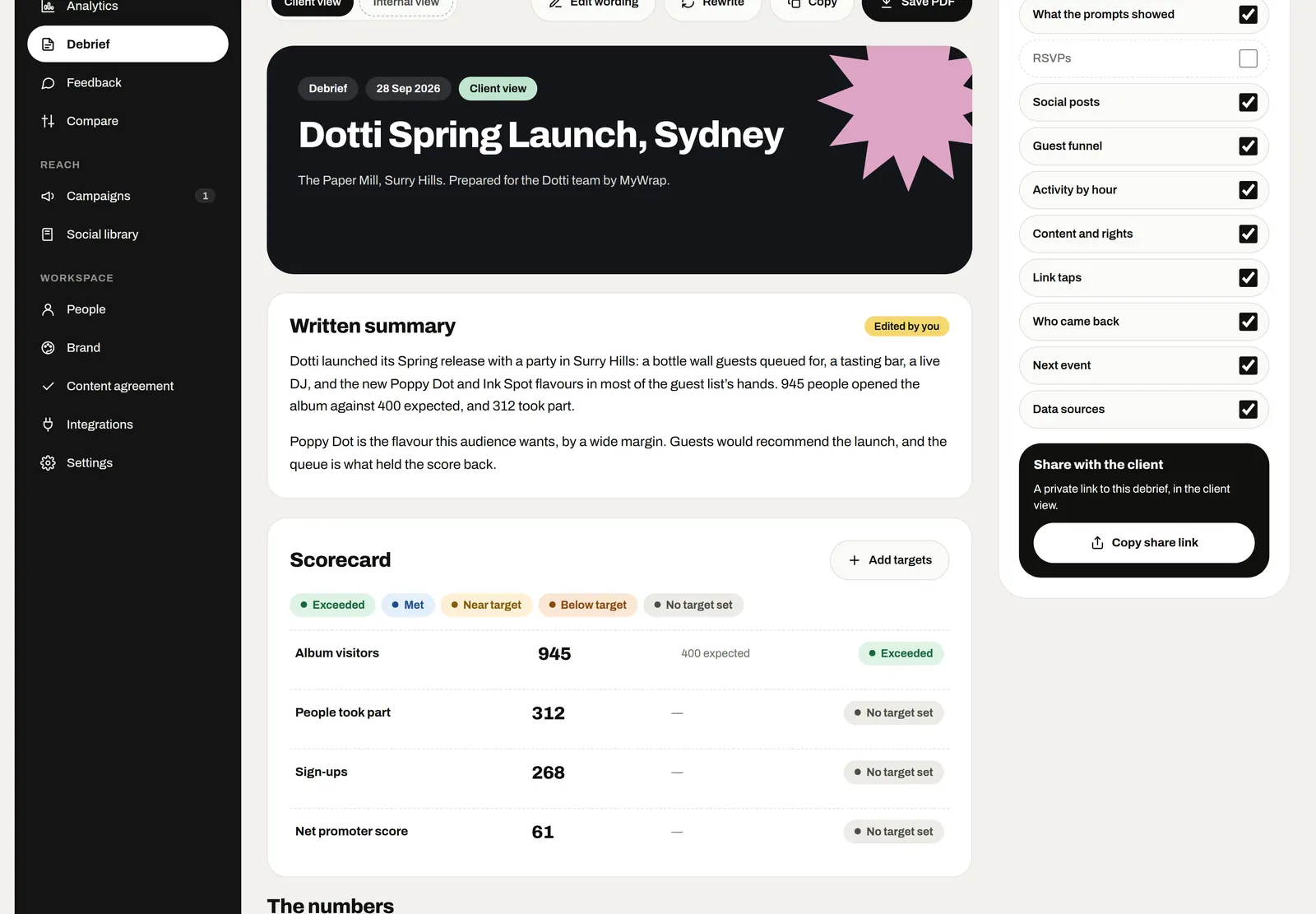
One page: the goal, the count, the cost per result, two guest quotes, and three things you'd change. A debrief can be written straight from the event and shared as a PDF, which beats rebuilding it from memory a fortnight later.

Then put a reminder in the calendar for 30 and 90 days out. Contacts who opted in sync to Klaviyo or HubSpot, so you can see who opened, came back or became a customer. That's when the real return finally shows up.

Add the late numbers to the same page. A debrief that gets updated is worth ten that get filed.

The Debrief page, ready to review and save as a PDF
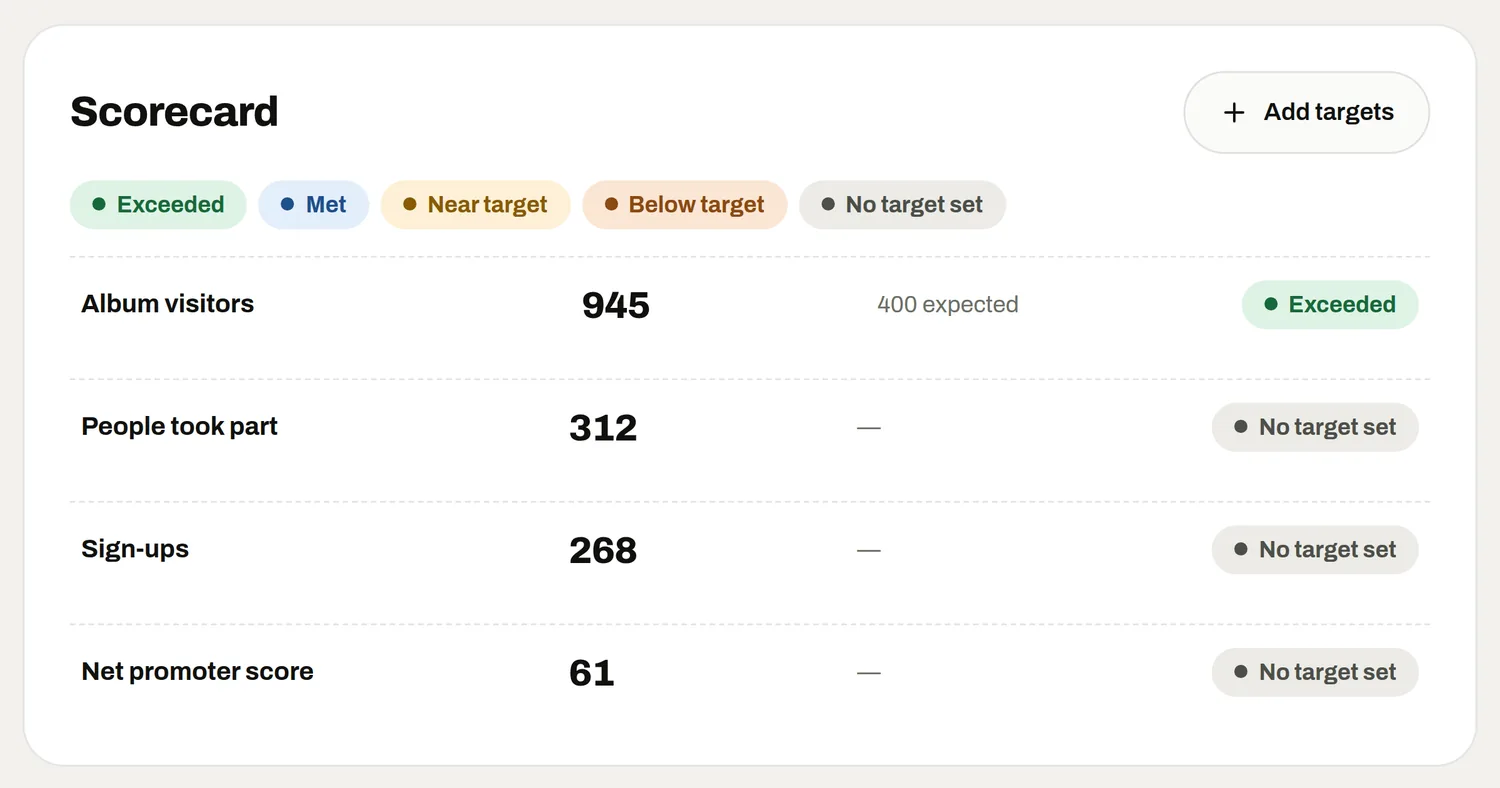
The debrief scorecard: album visitors, people who took part and sign ups against their targets
The one-page summary, measured and estimated kept apart.

Your take

Three quick ones. Tap an answer to see how everyone else replied. We read every answer, it shapes what we build next.

1 of 3

Do you agree an event goal before doors open?

2 of 3

Which number do you lead with when reporting on an event?

3 of 3

What makes event ROX hardest to prove for you?

What you wish this guide covered, what drives you mad about event photos, anything. Read by the people building MyWrap.

Steal this

Three bits to copy into your own debrief and calendar.

The goal line (send before the event)

“Goal for [event]: [number] [result], for example 200 opted-in contacts. We'll count it on the day and check what came of it at 30 and 90 days.”

The one-line ROX summary

“[Event] cost [total], brought in [count] [result], which is [cost per result] each, against [comparison] for the same result through [other channel].”

The end-of-event question

“Before you go: in one sentence, what would you tell a friend about today?”

Fair questions

How do I measure event ROX?

Here's how to measure event ROX: agree one goal before the event, count the actions that match it (contacts, usable photos, answers), divide the total cost by that count, and compare the result with what the same outcome costs you elsewhere. Then check at 30 and 90 days for what the contacts did next.

What metrics should I track at an event?

Track actions, not impressions: attendance, guests who added photos, poll and question answers, and opt-ins with consent. Pick the one that matches your goal as your headline number.

How do I show ROX for a brand awareness event?

Turn awareness into something countable: guests who shared their recap, opted-in contacts, or usable content you'd otherwise have to shoot. If none of those apply, say plainly that the event was a bet on awareness and report what you can count.

When should I measure event ROX?

Twice at least. Count actions on the day, then look again at 30 and 90 days, when opted-in contacts have had time to open, reply or become customers.

Do I need a spreadsheet for event ROX?

A small one at most. A goal, an attendance count, one cost total and three or four action counts fit on one page, and a written debrief does the explaining.

Next up

See all guides