← All guides3After

Write the post-event report
your boss actually reads

8 min readUses Debriefs

The short version

  1. 1Decide what success means before doors open. A report can only score an event against targets someone wrote down.
  2. 2The first three lines are the report. Everything below them is evidence for the people who keep scrolling.
  3. 3End with what changes next time. A debrief with no next step is a souvenir, not a report.

Five moves, from brief to PDF

1Step 1 of 5

Write the targets down before the event

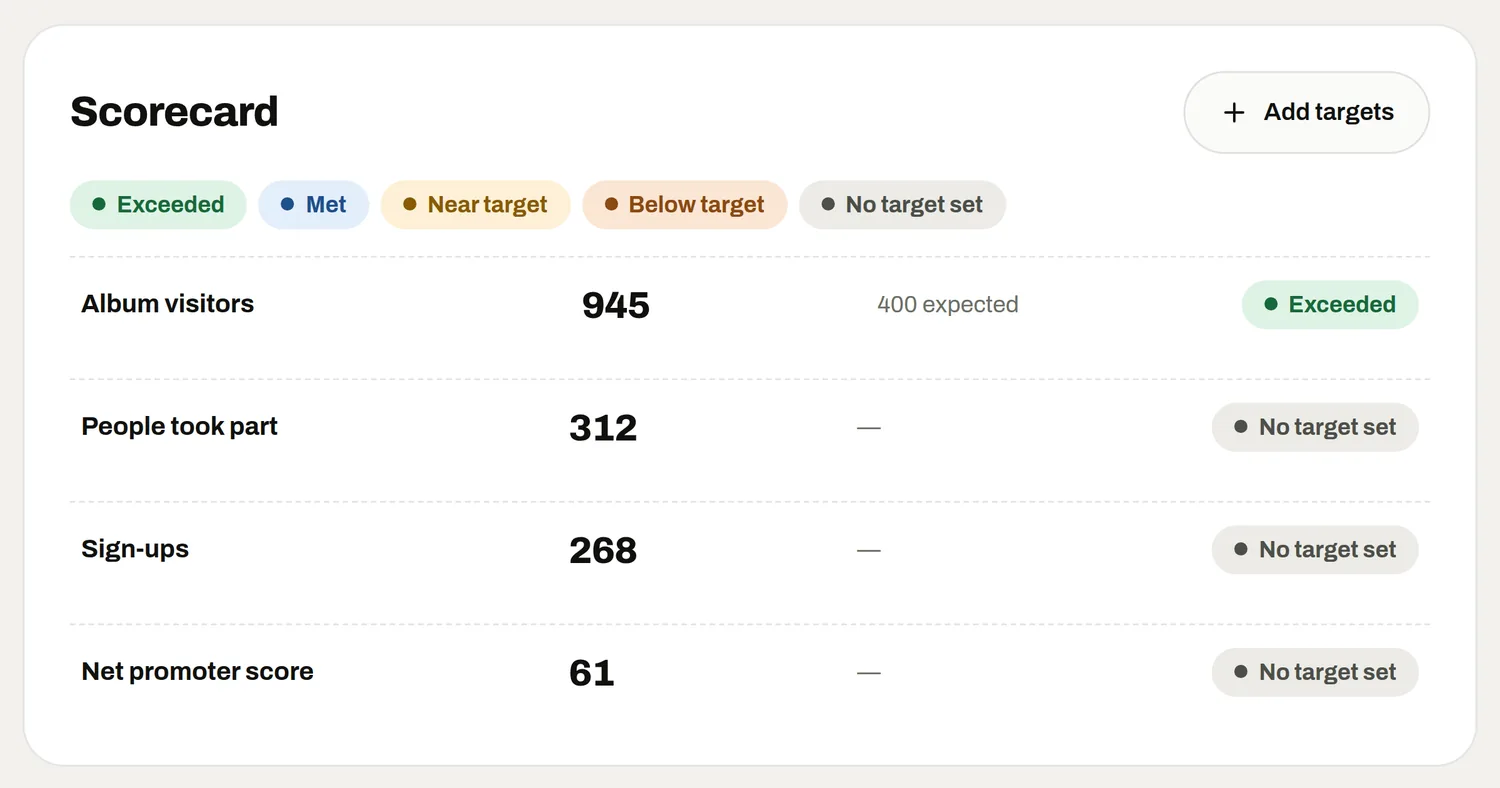
The hardest debrief to write is for an event nobody defined. Before doors open, agree three targets with whoever signs off the budget: say, how many guests take part, how many opt in to hear from you, and one question you want answered.

MyWrap's debrief scores the event against the targets you set, so this is also the setup step. Five minutes in the planning meeting saves a week of arguing about whether it went well.

Keep them plain. "Find out whether people prefer the new flavour" is a target. "Drive brand affinity" is a mood.
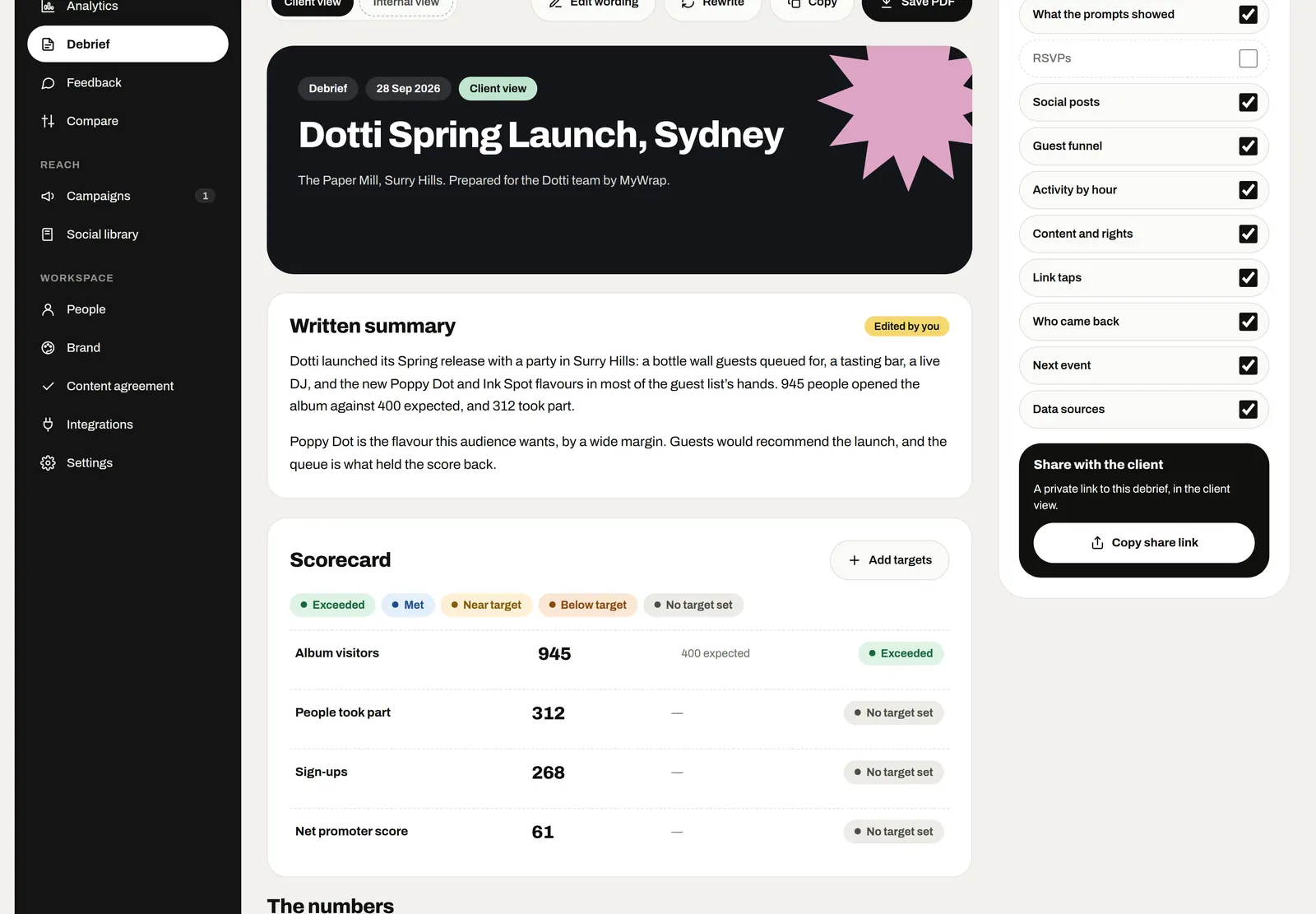
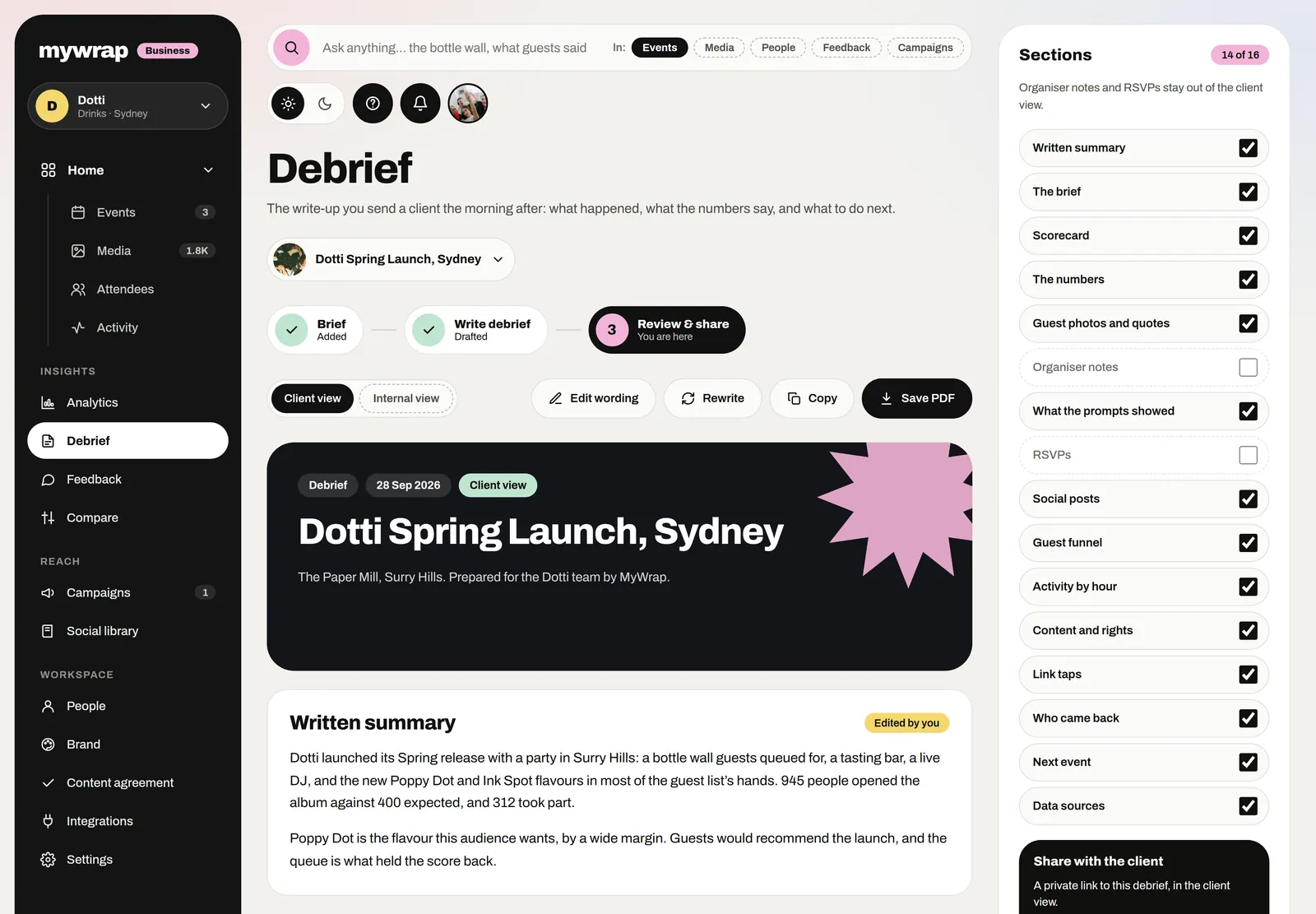
The Debrief page, ready to review and save as a PDF
The debrief scorecard: album visitors, people who took part and sign ups against their targets
2Step 2 of 5

Build the post-event report around one answer

Your boss will read the first three lines, glance at one photo and decide whether to keep going. So the first three lines need to say: did it work, what was the biggest win, and what do we change.

Write those last, once you have read everything else, but put them first. It feels backwards. It is the only order that survives a skim on a phone between meetings.

The debrief MyWrap writes is a two-minute read with the big wins at the top and what to try next time at the end. Your job is to check it, sharpen the top, and add anything only you know.

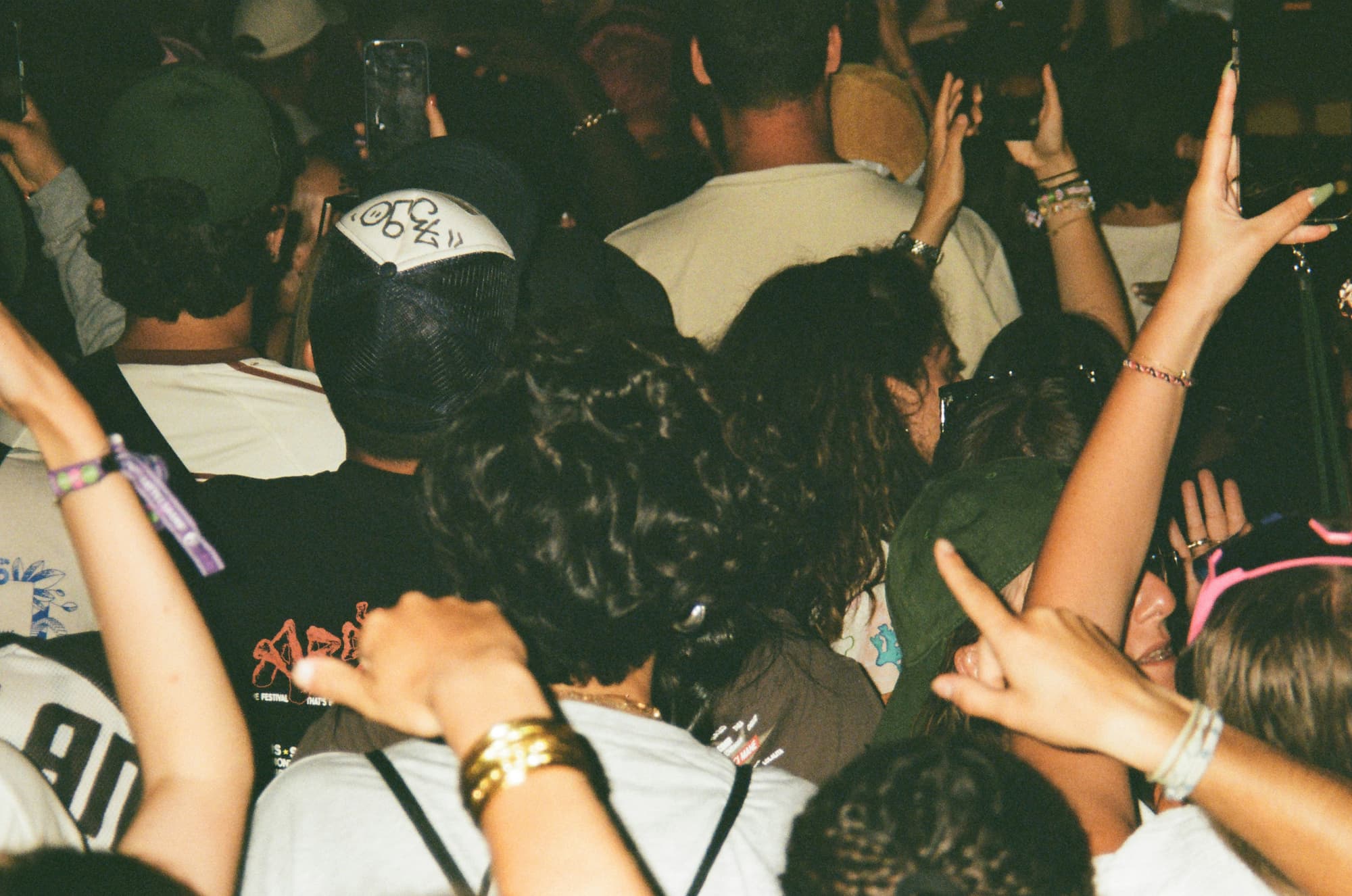
A crowd with hands in the air
One photo the reader will remember.
3Step 3 of 5

Put a guest's voice next to every number

Numbers on their own are easy to nod at and forget. A number with a guest's words beside it gets remembered and repeated in the next meeting.

Pull quotes from poll answers and the guestbook, word for word, typos and all. Pair a participation figure with the photo guests reacted to most. Readers believe a real comment far more than any adjective you could write.

Pick quotes that are specific rather than glowing. "The tasting bar queue was too long" is more useful, and more credible, than five people saying it was amazing.

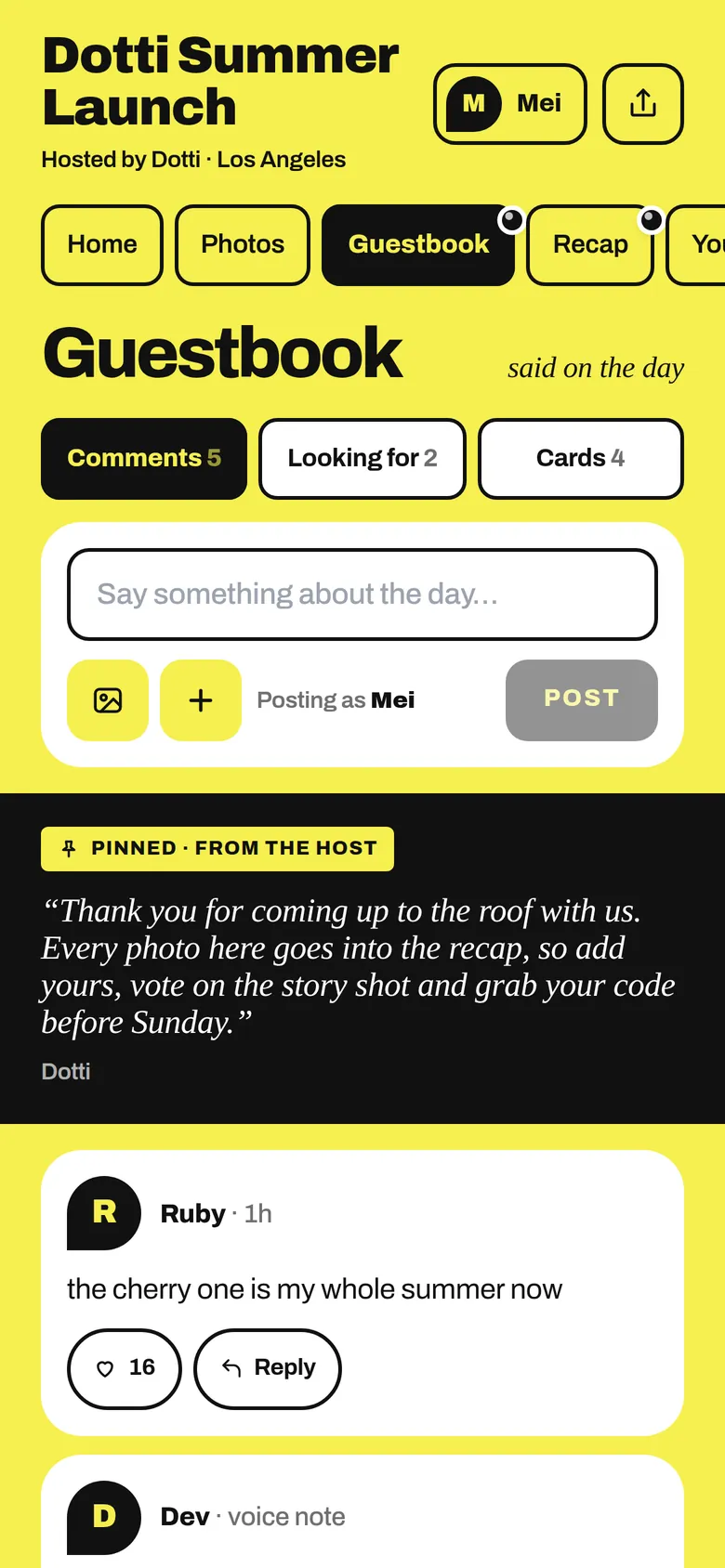
The album’s Guestbook, with a note from the host pinned at the top
The guestbook: the quotes for your report are usually already in here.
4Step 4 of 5

Keep measured and estimated apart

A debrief brings reach, contacts, content and answers together, and they are not all the same kind of number. Guest uploads and opt-ins are counted. Online reach is estimated, and should be labelled that way.

Mixing them is how a good report loses trust. One inflated reach figure and the reader starts doubting the real numbers next to it.

If someone hands you a figure MyWrap could not see, like footfall from the venue or sales from the till, add it with its source in brackets. It costs one line and saves an awkward question.

5Step 5 of 5

End with three changes, then send the PDF

Close with what worked and what to change next time, three items at most. Make each one something a person can actually do: move the QR to the bar, cut the second speech, start the poll earlier.

Share it as a PDF to the team or the client. No slides to build, which means it can go out while people still remember the event, ideally within the week.

Once you have run a few, stack each new debrief against the last ones. The interesting story is rarely one event. It is whether the third pop-up did better than the first.

The Debrief page, ready to review and save as a PDF
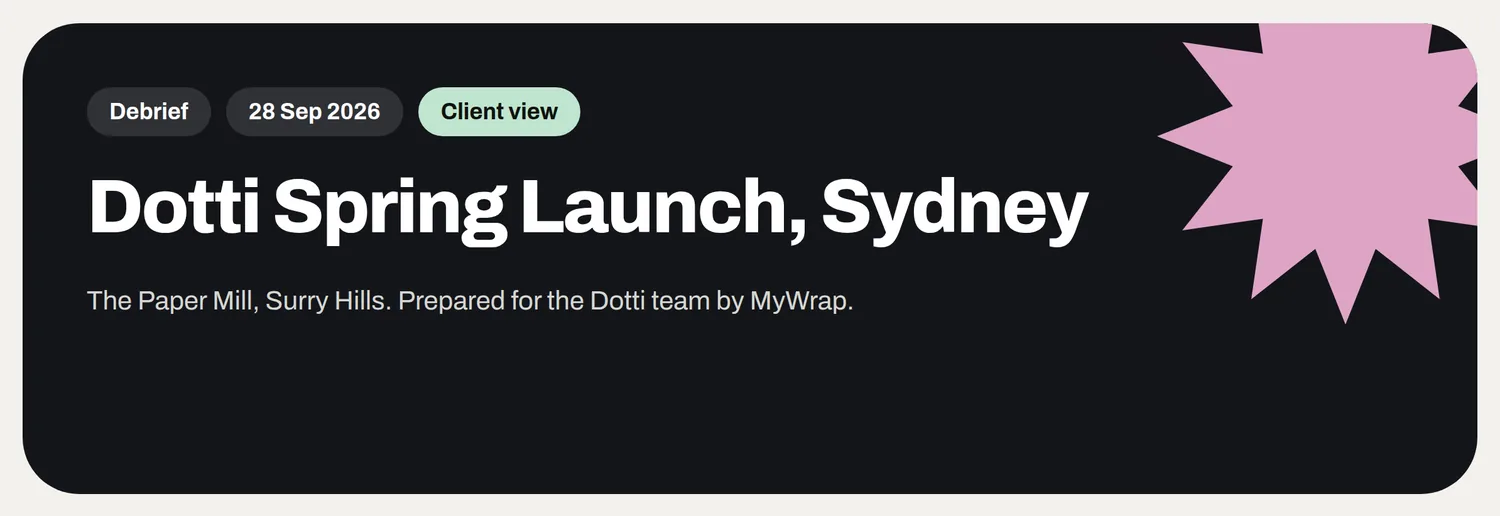
The debrief cover for Dotti Spring Launch, Sydney, prepared for the Dotti team
The debrief, built from the album, ready to send as a PDF.

Your take

Three quick ones. Tap an answer to see how everyone else replied. We read every answer, it shapes what we build next.

1 of 3

When does your post-event report usually go out?

2 of 3

How much of your debrief does your boss actually read?

3 of 3

What's the worst part of writing a debrief?

What you wish this guide covered, what drives you mad about event photos, anything. Read by the people building MyWrap.

Steal this

A summary, an email and a closing section. Fill in the brackets.

The three-line summary

“[Event] hit [2 of 3] targets. The biggest win was [win], backed by [number]. Next time we change [one thing], because [guest evidence].”

The covering email

“Hi [name], the debrief for [event] is attached. The short version is in the first three lines. Happy to talk through the rest on [day], but you should not need to.”

What we'd change

“1. Move [thing] to [place], because [what guests said]. 2. Cut [thing], because [number]. 3. Keep [thing] exactly as it was.”

Fair questions

What should a post-event report include?

The answer first (did it work), then the evidence: participation, opt-ins, content collected, what guests said and how it travelled online. Finish with what to change next time. Anything else is optional.

How long should an event debrief be?

Short enough to read in a couple of minutes. If it needs a table of contents, it is a deck, and decks get skimmed even harder.

When should I send the debrief?

Within the week, while people still remember the event. Waiting for perfect numbers usually means sending it to people who have moved on.

What if the event missed its targets?

Say so in the first line, then explain why and what changes. A debrief that is honest about a miss earns more trust than one that hides it, and makes the next budget easier to win.

Can I send the debrief to a client?

Yes. Debriefs share as a clean PDF, so you can send it to your team or your client without rebuilding it in slides.

Next up

See all guides