
Why brands sponsor events and what makes them sign again
By the MyWrap teamNov 19 2026
Guide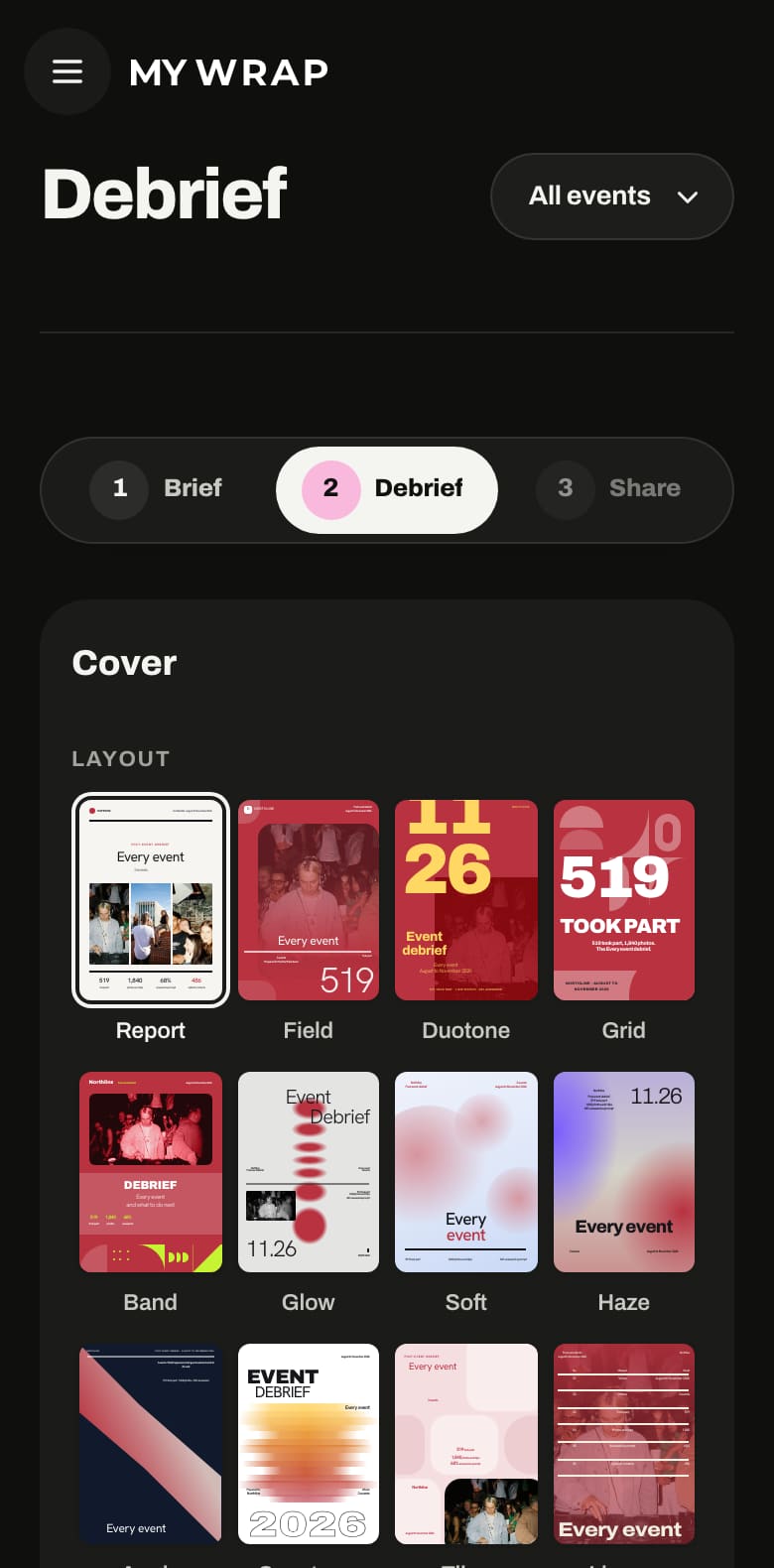
A brand signs the first time for your audience. It signs again for the receipts. Here's what sponsors are actually paying for, and how to send them proof they can take to their boss.
Six steps from first pitch to signing again
Step 1
Know what a brand is really buying
Brands sponsor events for one reason that comes in a few flavours. They want to be in front of a particular group of people, somewhere those people are relaxed enough to listen. An ad interrupts somebody's evening. An event lets a drinks brand put a cold can in a guest's hand on a hot afternoon, and lets a skincare brand talk to forty people who chose to spend their Saturday morning on a wellness class.
Underneath that, the sponsorship manager wants some very concrete things. Contacts they're allowed to email afterwards. Posts from real people, and how far those posts travelled. Honest feedback from people who just tried the product. A read on whether the crowd liked them. And sales they can trace back to your event, through a link or a code.
Then there's the part nobody puts in the deck. The person who signs your agreement has a boss, and that boss will ask what the money did. Every sponsorship is really a bet that this person will have a good answer in six weeks. Make that answer easy to give and you've done most of the selling.
Step 2
Pitch the audience, with numbers from your last event
Most sponsor decks open with the event. Sponsors skim straight to the audience. So lead with who comes: how many, what they have in common, what they told you last time, and how many came back for a second go. A crowd of 120 people who all run small restaurants is worth more to the right kitchen brand than 2,000 people who wandered in off the street.
Use real numbers and say where each one came from. A door count is fine if you call it a door count. Answers to a question you asked guests on the day are gold, because no brand can buy that from a media kit. If this is your first event, say so and pitch your plan for measuring it. Sponsors forgive a first event. They don't forgive a made up number.
Then go where brands are looking. On MyWrap, switching on Sponsor Tap when you create an event lists it for brands that fit, with the kinds of sponsor you'd like, what they could bring and the city. Brands find it in Find events and ask to sponsor it, and you can still reach out first from Find brands.
Step 3
Build every package around something you can count
Tiers are fine. Call them gold and silver if you must. What matters is that each perk in a package comes back as a number afterwards. A logo on a banner is hard to count, so it's a weak thing to charge for on its own. A question the sponsor gets to ask every guest is easy to count, and the answers are worth far more to their marketing team than the banner ever was.
Perks that come back as proof: the sponsor's question as guests join, a box for guests to ask to hear from the sponsor, a link or discount code only your guests get, a product moment with a prompt for guests to share it, and posts from creators who came. Each one becomes a line in the debrief, and each one gives the sponsor's team something to do the week after.
Keep the asks of your guests small, though. One sponsor question when someone joins is charming. Four of them before a guest can get into the event page feels like a toll booth, and guests will say so in the feedback, which the sponsor will read.
Step 4
Agree the scorecard before anyone ships a pallet
Before the event, sit down with the sponsor and write what a win looks like for them. One goal with a number on it: "150 guests ask to hear from us", or "200 taps on the preorder link". Then put it in writing, so there's no debate later about what was promised.
This protects you more than it protects them. Without an agreed number, the sponsor's boss gets to decide afterwards what your event should have done, and that person was never there. With one, the conversation after is short: here's what we agreed, here's what happened.
Agree the boring parts too. When product arrives and who signs for it, what you'll send afterwards and by when, and when money moves. Brands renew with organizers who were easy to work with, sometimes over ones with better numbers. On Sponsor Tap this all lives in the partnership: you both accept the agreement, the brand adds a tracking link when product ships, and you tap It arrived when it lands.
Step 5
Collect the proof while guests are still there
Almost everything a sponsor wants happens during the event, and almost none of it can be rebuilt afterwards. You can't go back and ask 300 people whether they'd buy the drink again, or get consent from someone who left an hour ago. The collecting has to be part of how guests take part.
Count actions over impressions: guests who answered the sponsor's question, guests who asked to hear from them, taps on their link and codes copied. Keep the exact consent wording each guest saw, because a contact list without it is a problem for the brand's legal team. And watch the numbers during the event, so a quiet sponsor question can still be rescued with one announcement from the DJ.
Then there's everything guests post. Tagged stories and reels are reach the sponsor didn't pay a media agency for, and the comments under them tell you how people felt. Track the event's tags and hashtag from the start, so posts are counted as they go up instead of hunted down a week later.
Step 6
Send the debrief within a week, then talk about next time
The debrief is your renewal pitch. Send it within a week, while the sponsor's team still remembers the event and before their next budget meeting. Lead with the goal you agreed and the result against it. Then the rest: who took part, the answers to their question, the contacts who opted in, link taps and codes, posts and their reach, and a couple of things guests said in their own words.
Keep counted numbers apart from numbers someone handed you. Venue footfall and sales from the sponsor's own tills belong in the debrief, labelled as entered after the event. A sponsor who catches one inflated number will quietly discount every other number on the page.
Make it client ready, so the sponsorship manager can forward it to their boss without writing a covering note. Then, on the call about it, ask the question: same again next time? Offer first refusal on the next date, or a series of events at a better rate. Renewals get signed while results are fresh. On Sponsor Tap, money paid through MyWrap is due seven days after you send the debrief, which is a lovely reason not to sit on it.
Lines to copy
Three bits to copy into your pitch, your agreement and your follow up.
[Number] people came to [event] last time, and [share] of them had been before. When we asked what they cared about most, the top answer was [answer].
Goal for [sponsor] at [event]: [number] [result], for example 150 guests asking to hear from you. We'll count it on the day and send the debrief by [date].
You got [result] against a goal of [target]. We're holding [next date] for you until [deadline]. Shall we lock it in?
Questions
Why do brands sponsor events?
To reach a specific group of people in person, somewhere they're happy to listen. In return they want things they can report: contacts who opted in, posts and their reach, feedback on the product and sales they can trace through a link or code.
What do sponsors look for in an event?
An audience that matches their customers, real numbers about who comes, perks they can measure and an organizer who reports back on time. A small crowd that fits beats a big one that doesn't care.
How do I get sponsors for my event?
Pitch the audience with numbers from your last event, build packages around things you can count, and go where brands look. On MyWrap, Sponsor Tap lists your event for brands that fit, and they can ask to sponsor it.
What should a sponsorship report include?
The goal you agreed and the result against it, who took part, answers to the sponsor's question, opted in contacts with their consent, link taps and codes, social posts with their reach and a few guest quotes. Label any number you didn't measure yourself.
How do I get sponsors to renew?
Send the debrief within a week, lead with the agreed goal and ask about next time on the call about it. Offer first refusal on the next date while the results are fresh.
In the Help Center
How do I show a sponsor what their event did?What is in a MyWrap debrief?How do I export contacts and consent records?Try it on your next event
One link for guests. Contacts, feedback and a debrief for you.